
Planning to study Spanish in Cadiz? This guide covers course types, language schools, neighbourhoods, visa basics and realistic travel arrangements, so you can plan your stay with confidence. As local drivers, we regularly take students to classes, accommodation and airports, including Jerez (XRY), Seville (SVQ) and Málaga (AGP). Because we know the local routes and transport options, we can also help students decide when public transport is practical and when a private transfer makes arrival days, early classes and exam mornings easier.
Arriving soon? Request a quote for your airport transfer through our booking form or WhatsApp us on +34 633 847 637. You can also read our guide to airport transfers for students in Cadiz.
Why Study Spanish in Cadiz?
Why Study Spanish in Cadiz in a Coastal City?
Cádiz combines a historic centre, Atlantic beaches and a relaxed coastal lifestyle. What’s more, many central areas are walkable, while cafés, markets and everyday conversations give you plenty of opportunities to practise Spanish outside the classroom.
One of the main advantages of Cádiz is that you can experience local life without travelling long distances. For example, you can attend your Spanish classes in the morning, have lunch near the school and explore the old town in the afternoon. In addition, the seafront offers a pleasant place to walk and practise your listening skills.
Driver insight: During hot weather, even a short journey can feel tiring when you are carrying books, shopping or luggage. For this reason, a pre-arranged ride can be a convenient alternative to walking, particularly if you have early classes or specific appointments.
The Andalusian accent: What should you expect?
People in Cádiz often speak quickly and may soften or drop some final sounds. As a result, your first conversations can be challenging, especially if you are a beginner. However, regular exposure will gradually help you become familiar with the local rhythm.
You will also hear regional expressions in everyday conversations. For instance, one you may come across is quillo, a colloquial form related to chiquillo. Although you may not understand everything at first, listening carefully, asking questions and practising every day will help you become more familiar with local speech.
Best Time to Study Spanish in Cadiz
The best time to study in Cádiz depends on your preferences and budget. In general, each season offers a different experience:
- Spring and autumn: Comfortable temperatures make walking and exploring more enjoyable. In addition, you can experience a lively student atmosphere.
- Summer: There is more activity and plenty of beach time. However, accommodation demand and temperatures are also higher. Therefore, it is worth booking early.
- Winter: The city is generally quieter, which may mean more accommodation options. Nevertheless, some services and activities operate on seasonal schedules.
If you have flexible dates, compare course and accommodation prices across different months before booking. In particular, a stay outside the busiest summer weeks may give you more options and greater flexibility.
Which Language Schools Can You Choose to Study Spanish in Cadiz?
Cádiz offers several options for international students who want to learn Spanish. However, not every school provides the same programmes or learning environment. For this reason, compare course levels, class sizes, accommodation options and teaching schedules before making your choice.
We are an independent transfer company and are not affiliated with any school. Instead, the information below is based on the institutions’ published descriptions and the Cádiz tourism directory. Before enrolling, always confirm course dates, availability and prices directly with each provider.
| School | What it offers | Official information |
|---|---|---|
| CLIC International House Cádiz | Intensive Spanish courses, cultural activities, private lessons and specialised programmes. Accommodation options include host families, shared flats and student residences. | CLIC Cádiz |
| Spanish in Cádiz | Intensive and long-term courses, private lessons, DELE preparation and specialised programmes. The school also lists accommodation and cultural activities. | Spanish in Cádiz |
| Academia Lingua Franca | Intensive and regular Spanish courses, DELE preparation, conversation activities and cultural learning. | Academia Lingua Franca |
Once you have compared the available schools, consider which programme best fits your goals. For example, some students prefer intensive group lessons, whereas others benefit more from private tuition or specialised courses.
You can also consult the Cádiz Tourism directory of Spanish language schools to explore other local options. This is particularly useful if you want to compare additional institutions before making a decision.
How to choose a Spanish course in Cadiz
Before enrolling, compare more than the weekly price. For example, check the number of lessons, class size, course level and start dates. You should also find out whether the programme includes cultural activities or learning materials.
In addition, ask whether the school can help arrange accommodation, provide documents for a student visa application or offer preparation for an official Spanish examination. That way, you can compare what each programme actually includes rather than relying on the advertised course price alone.
Course Types for Students Who Study Spanish in Cadiz
Choosing the right programme depends on your learning goals and available time. For instance, some students want to improve their everyday conversation skills, while others need an official qualification. Therefore, consider your priorities before selecting a Spanish course in Cadiz.
Intensive Spanish courses
ntensive programmes are suitable for students who want regular classroom practice and a structured learning routine. Depending on the school, courses may offer 20, 25 or 30 lessons per week.
For example, CLIC International House publishes intensive options with different weekly lesson loads and levels from A1 to C2. Its published 2027 programme lists group classes with a maximum of 10 students for the Intensive 20 option. However, course formats and class sizes can differ between programmes, so check the details before booking.
DELE and SIELE preparation
f you need an official Spanish-language certificate for academic, professional or personal reasons, look for a course specifically designed around the examination you plan to take.
There are two main options to consider:
- DELE: An official diploma issued by Instituto Cervantes on behalf of the Spanish Ministry of Education.
- SIELE: A digital Spanish-language assessment with different examination options.
Before booking, ask the school whether preparation lessons are available for your level and preferred exam date. Also, remember that course fees and examination registration fees are usually separate.
For official examination details, visit Instituto Cervantes. This will help you check the current requirements and fees before making a decision.
Private lessons and conversation practice
Private lessons allow you to focus on particular weaknesses, pronunciation, grammar or professional vocabulary. By contrast, conversation groups offer opportunities to practise speaking with other learners and local residents.
For many students, combining classroom lessons with informal conversation is a useful way to build confidence. As a result, you can put what you learn in class into practice during real conversations. This approach is particularly helpful when you want to improve your fluency in everyday situations.
Short stays versus long stays
The length of your stay can influence the type of course that suits you best. To help you compare, here are some examples:
- One to two weeks: A short intensive programme can help you become familiar with Spanish and establish a study routine. However, you will need to make good use of your time.
- Three to six weeks: A longer stay gives you more opportunities to practise outside class, develop vocabulary and explore the city. In addition, you can gradually become more comfortable with everyday conversations.
- Several months: A longer programme can support more substantial progress, especially when you combine lessons with regular conversations and daily activities in Spanish.
Where to Stay When You Study Spanish in Cadiz
Accommodation is an important part of your study experience because it affects your daily routine, transport needs and overall budget. For example, living near your school can save commuting time. On the other hand, choosing a more residential area may offer different accommodation options and a quieter environment.
Old Town (Casco Antiguo)
The historic centre is a popular choice for students who want to be close to cafés, shops, cultural attractions and many central services. In fact, some schools and institutions are within walking distance, depending on their location.
The streets are charming, although some buildings are older and accommodation can vary considerably. Therefore, check the exact address, access arrangements and noise levels before confirming a booking. This is especially important if you are planning a longer stay.
Puerta de Tierra and Playa de la Victoria
This part of Cádiz offers a more modern residential atmosphere, with supermarkets, services and a long sandy beach. Consequently, it may appeal to students who prefer a more residential setting.
However, if your school is in the historic centre, you may need to allow extra time for the daily journey. Depending on your exact address and route, walking or using a local bus may be practical.
Homestay, shared flat or studio?
Your accommodation choice affects both your budget and your opportunities to practise Spanish. In other words, the closest accommodation is not always the best option. Instead, consider your budget, daily schedule and preferred lifestyle before making a decision.
To help you compare, consider these options:
- Homestay: Living with a local family can provide daily language practice and may include meals. However, check house rules and exactly what is included in the price.
- Shared flat: This is a useful option for students who want more independence while meeting other residents. Nevertheless, remember that you will share common areas and household responsibilities.
- Studio: A studio offers greater privacy and personal space. On the other hand, it usually costs more than sharing accommodation.
Ultimately, the best accommodation is the one that balances comfort, location and affordability.
Driver insight: If you have early classes, heavy luggage or a tight schedule, check the journey from your accommodation to the school before choosing where to stay. That way, you can estimate your daily travel time and decide whether you will need public or private transport.
What Does It Cost to Study Spanish in Cadiz?
The total cost of studying in Cádiz varies according to your school, course intensity, accommodation and length of stay. However, tuition is only one part of your budget. In addition, you should consider meals, learning materials, local transport and airport transfers. By comparing these expenses, you can plan your stay more realistically.
Published Course and Accommodation Prices
The following figures are published examples, not a guarantee that every school offers the same rates. Therefore, contact each provider to confirm its current prices before booking.
Once you have identified the main expenses, compare the different study options below. This will help you understand which arrangement offers the best balance between cost and learning opportunities.
| Item | Published price or guidance | Source and date |
|---|---|---|
| Intensive Spanish course | CLIC Intensive 20: €240 per week for a 1–4 week booking in 2027. Longer bookings have lower weekly rates. | CLIC 2027 Dates & Prices, checked 18 November 2026 |
| DELE examination | 2026 fees in Spain range from €112 to €240, depending on the level. | Instituto Cervantes, 2026 fee table |
| Homestay | CLIC lists a single room with half board from €255 per week in 2027, with a higher seasonal rate. | CLIC 2027 accommodation prices |
| Shared flat | CLIC lists a single room in a shared flat from €230 per week in 2027. Other accommodation options may differ. | CLIC 2027 accommodation prices |
| Menu del día | Ask local restaurants for their current menus and prices. | Check directly with each restaurant |
| Books and materials | CLIC lists books at €30 per level. Other schools may use different materials or fees. | CLIC 2027 Dates & Prices |
Prices are subject to change, and accommodation rates may vary by season and availability. For example, CLIC lists higher homestay prices during its 2027 high season. Therefore, check the latest price list before confirming your booking.
You can check the CLIC course and accommodation information and the official DELE fees from Instituto Cervantes.
A practical way to compare your total budget
When comparing schools, calculate the full cost of your stay rather than looking only at tuition. This is important because additional expenses can make two apparently similar programmes quite different in price.
As a starting point, include:
- Course registration and weekly tuition.
- Books and learning materials.
- Accommodation and any included meals.
- Examination fees, if applicable.
- Food, personal expenses and local transport.
- Airport transfers and travel to appointments.
By considering all these expenses together, you can compare different course and accommodation packages more accurately. In addition, you will have a clearer idea of how much money to set aside before travelling.
| Study option | Advantages | Things to consider | Best suited to |
|---|---|---|---|
| Intensive group course | Structured learning and regular interaction | Less individual attention than private lessons | Short and medium stays |
| Private lessons | Tailored to your goals | Higher cost per lesson | Specific learning needs |
| DELE/SIELE preparation | Exam-focused practice | Exam registration is usually separate | Students seeking certification |
| Homestay | Daily exposure to Spanish | House rules and meal arrangements | Students seeking immersion |
| Shared flat | Independence and social opportunities | Shared spaces and household arrangements | Medium and long stays |
| Studio | Privacy and personal space | Usually a higher accommodation cost | Students who prefer independence |
Visa and Paperwork Tips for Studying Spanish in Cadiz
Visa and residence requirements depend on your nationality, course duration and personal circumstances. Therefore, check the applicable rules before paying for a course or booking accommodation. For students travelling from outside the EU, it is particularly important to confirm the required documents with the relevant Spanish consulate.
EU and non-EU students
EU citizens generally do not need a student visa to study in Spain. However, longer stays may involve additional registration requirements.
By contrast, students from outside the EU should check the current student visa rules before paying for a course or booking accommodation. Depending on the application, requirements may include proof of enrolment, sufficient financial resources, health insurance and accommodation details.
As these rules can change, consult the official Spanish consulate or immigration authority responsible for your country of residence. This is the best way to obtain information that applies to your particular circumstances.
Student visa checklist
Depending on your circumstances, you may need:
- An admission or enrolment letter from the school.
- Proof of sufficient financial resources.
- Health insurance that meets the applicable requirements.
- Accommodation information.
- A valid passport and the relevant application documents.
- An appointment with the appropriate Spanish consulate.
Ask your school which documents it can provide. Nevertheless, always confirm the official requirements with the relevant authority, since the school cannot replace the consulate’s guidance.
Health cover and appointments
Before travelling, keep your insurance details, emergency contacts and important documents accessible. Similarly, if you need a medical appointment or administrative visit during your stay, check the address and appointment time in advance.
For time-sensitive appointments, arranging transport beforehand can help you plan the journey more comfortably. This is especially useful if you are unfamiliar with the area or need to arrive at a specific time.
Life After Class: Enjoy Your Stay When You Study Spanish in Cadiz
Learning Spanish does not stop when your classes finish. In fact, everyday activities can help you practise vocabulary, improve your listening skills and understand local culture. For example, visiting a market, ordering food or asking for directions gives you opportunities to use Spanish in real situations.
What’s more, many of Cádiz’s most interesting places can be explored on foot, making them easy to include in your free time. As you explore the city, you can gradually become more familiar with local expressions and customs.
Free and low-cost things to do
You can enjoy many parts of Cádiz without spending much. For example, consider these activities:
- Walk around the historic centre and its traditional squares.
- Visit the Roman Theatre and other historic areas.
- Explore local markets and neighbourhood streets.
- Enjoy the waterfront promenade along Campo del Sur.
- Watch the sunset near the Atlantic coastline.
As you explore, these activities can also help you become familiar with everyday vocabulary and local expressions.

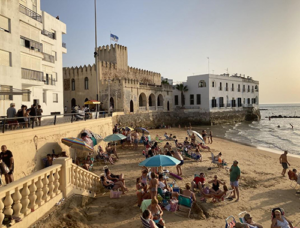
PHOTO: arial.travel
Beaches: La Caleta or Playa de la Victoria?
Both beaches offer a different experience, so your choice depends on what you are looking for.
- La Caleta: Located beside the historic centre, this small beach is known for its traditional boats and beautiful sunsets. As a result, it is a popular place for an afternoon walk.
- Playa de la Victoria: A longer sandy beach with services and plenty of space for a full afternoon by the sea. In contrast to La Caleta, it offers a more spacious beach setting.
Weekend trips from Cádiz
If your course includes free weekends, you can also explore nearby destinations. For example, Jerez, Vejer and Tarifa offer different experiences, from historic attractions to coastal activities. Depending on your interests, you can choose a day trip that fits your schedule and budget.
- Jerez de la Frontera: Known for its wine heritage, equestrian traditions and historic centre.
- Vejer de la Frontera: A picturesque white village with narrow streets and traditional architecture.
- El Palmar: A coastal destination popular for its beach and surfing atmosphere.
- Bolonia: Known for its impressive sand dune and Roman archaeological site.
- Tarifa: A coastal town associated with wind sports and views towards North Africa.
For small groups, a private van may be worth comparing with separate public transport tickets. Ultimately, the best option depends on the number of passengers, destination and travel schedule.
Getting Around Cadiz While You Study Spanish
Cádiz is a relatively compact city, so walking is practical for many everyday journeys. Nevertheless, some destinations may be easier to reach by bus or private transport. Ultimately, your best option will depend on where you live, where your school is located and how much time you have.
Walking, buses and cycling
Walking is practical for many journeys in the historic centre. For longer routes, local buses can be useful, including trips between the old town and Playa de la Victoria.
Cycling is another option. However, weather conditions and the Levante wind can affect how comfortable a ride feels. Therefore, consider the forecast and your route before choosing to cycle.
Private transfers for airports and exam days
A private transfer can be useful when you arrive with luggage, travel outside regular public transport hours or need to reach an appointment at a specific time. In these situations, having transport arranged in advance can make planning easier.
Cádiz Taxi Premium can arrange journeys between the airports, your accommodation and other agreed destinations. Services are quoted according to the route, passenger numbers, luggage and requested schedule.
For a full guide to arrivals, read our airport transfers for students in Cadiz. Alternatively, if you are flying into a specific airport, we also have guides to Seville Airport to Cadiz and Jerez Airport to Cadiz.
This is particularly helpful when public transport schedules do not match your flight arrival or appointment time. As a result, arranging your journey in advance can make travel days easier to organise.

Airport routes: Quick view
The following are approximate road-planning estimates from the airports to Cádiz. Please note that actual journey times depend on traffic, the exact destination and road conditions. Therefore, check your route before travelling.
| Airport | Approximate road time to Cádiz | Good to know |
|---|---|---|
| Jerez (XRY) | Around 30–40 minutes | The closest airport to Cádiz. |
| Seville (SVQ) | Around 1 hour 30 minutes–1 hour 45 minutes | Offers connections from a wider range of destinations. |
| Málaga (AGP) | Around 2 hours 30 minutes–3 hours | A larger airport with a broad range of connections. |
If you are comparing airports, consider more than the flight price. In addition, include the onward journey, luggage, arrival time and how you will reach your accommodation. This will help you compare the full cost and convenience of each option.
Booking Your First Week in Cadiz?
Tell us your flight details, arrival time and accommodation address, and we can review your transfer requirements and send you a personalised quotation.
Request a quote through our booking form or contact us on WhatsApp at +34 633 847 637.
If you are travelling with classmates, let us know the number of passengers and luggage items. That way, we can check the most suitable vehicle option for your journey.
Sample Study Plans for Your Time Studying Spanish in Cadiz
A successful study routine should include more than classroom lessons. Alongside your classes, make time for conversation activities, cultural visits and independent revision. This way, you can practise what you learn and gradually become more confident using Spanish.
Two Weeks
Choose an intensive course, join a conversation activity and explore the historic centre. If your schedule allows, add a weekend visit to Jerez. This will give you an opportunity to practise Spanish outside the classroom as well.
One Month
Combine 20–25 lessons per week with conversation meetups, cultural activities and regular practice in cafés, markets and local shops. Meanwhile, if you are preparing for an exam, include time for mock tests and revision.
Three to Six Months
Build a consistent routine with classes, language exchanges and local activities. To measure your progress, set weekly goals for listening, speaking, reading and writing. In addition, review your goals regularly so you can adjust your study routine as your Spanish improves.
Quick Tips for Students
A little preparation can make your stay easier. Before travelling, keep these practical tips in mind:
- Book early: Compare course dates and accommodation before the busiest summer months.
- Check the full price: Ask whether books, registration and activities are included.
- Practise every day: Use Spanish in shops, cafés and everyday conversations.
- Choose accommodation carefully: Check the distance to your school and the transport options.
- Plan airport travel: Share your flight details and accommodation address when requesting a transfer.
- Prepare for the weather: Cádiz can be hot in summer and windy at other times of the year.
- Keep documents accessible: Save your enrolment, insurance and appointment details.
By following these steps, you can organise the practical details before departure and focus more on your studies once you arrive.
Plan Your Study Spanish in Cadiz Stay with Confidence
Planning ahead can make your experience of studying Spanish in Cádiz much easier. By comparing schools, accommodation and transport options, you can organise your budget and avoid unnecessary complications. As a result, you will have more time to concentrate on your classes and enjoy the city.
If you need an airport pick-up, a journey to your accommodation or transport for an exam or appointment, Cádiz Taxi Premium can prepare a personalised quotation based on your schedule.
Request your transfer quote:
Frequently Asked Questions About Studying Spanish in Cadiz
Frequently Asked Questions About Studying Spanish in Cadiz
1. Is Cadiz good for beginners?
Yes. Cádiz is a compact city where beginners can practise Spanish in cafés, shops, markets and everyday situations. For the best experience, choose a course that matches your current level and gives you enough opportunities to speak. In addition, try to use Spanish outside the classroom whenever possible.
2. When is the cheapest time to study Spanish in Cadiz?
Winter may offer more affordable accommodation options, although prices depend on the school, availability and length of stay. For this reason, compare course and housing rates for different dates before booking.
3. Should I choose DELE or SIELE?
It depends on your goals and preferred examination format. DELE is an official diploma with different levels, while SIELE is a digital assessment. Before deciding, check which certificate is accepted by the university, employer or institution that requires it.
4. Do I need a car in Cadiz?
No. Many central journeys can be made on foot, and local buses serve other parts of the city. However, private transfers can be convenient for airport arrivals, luggage, early appointments and journeys with several passengers.
5. How do I get from the airport to my school in Cadiz?
Jerez (XRY) is the closest airport, while Seville (SVQ) and Málaga (AGP) offer additional flight connections. Once you arrive, you can continue by public transport or arrange a private transfer directly to your accommodation or school. For more details, read our guide to airport transfers for students in Cadiz.